April 14, 2026
In the evolution of modern surveillance and industrial networks, the boundary between power systems and communication systems is rapidly disappearing.
What was once a collection of independent devices — cameras, switches, power units — has now transformed into a unified, intelligent infrastructure layer deployed at the network edge.
This shift is particularly evident in high-demand environments such as transportation systems, urban surveillance, and industrial facilities, where reliability, scalability, and real-time responsiveness are no longer optional, but fundamental requirements.
1. From Isolated Devices to Integrated Edge Nodes
1.1 Consider a large-scale highway monitoring system
Stretching across dozens of kilometers, the network must support high-definition PTZ cameras, wireless access points, and environmental sensors.
Traditionally, each of these devices required separate power lines, individual configuration, and manual maintenance cycles. The result was a fragmented system — complex to deploy and difficult to scale.
1.2 Today, this architecture is being redefined.
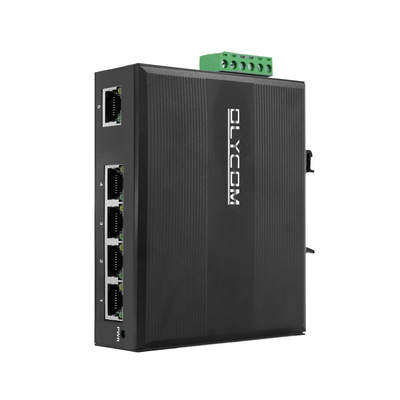
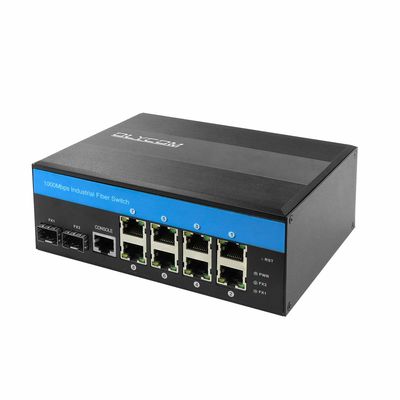
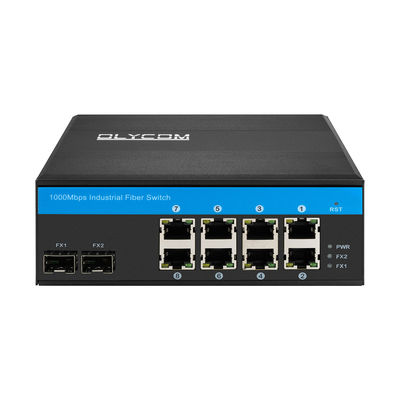
With the integration of high-power PoE++ technology, a single industrial PoE switch can simultaneously deliver both data and power to multiple high-consumption devices.
Cameras, wireless units, and sensors are no longer isolated endpoints — they become part of a centrally managed, unified system.
This transformation significantly reduces infrastructure complexity, while enabling faster deployment and greater operational efficiency.
2. Addressing Bandwidth Demands in High-Density Surveillance
2.1 As surveillance systems evolve, so does the volume of data they generate.
In environments such as airports, residential complexes, and smart campuses, dozens — or even hundreds — of cameras operate simultaneously, transmitting high-resolution video streams in real time.
In such scenarios, network congestion is not a theoretical risk but a practical limitation.
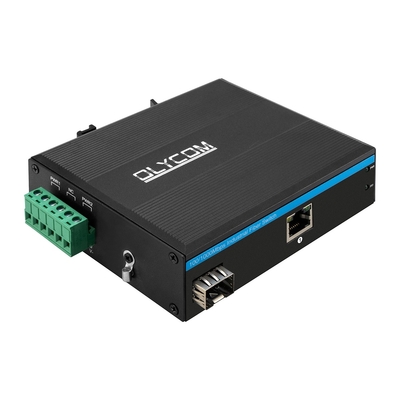
2.2 To address this, high-speed fiber uplinks play a critical role.
By enabling high-capacity data aggregation and transmission, the network can support continuous, multi-channel video streaming without latency or packet loss.
This ensures that monitoring systems remain responsive and reliable, even under peak operational loads.
![]()
3. Enabling Remote Operations in Unattended Environments
3.1 A defining characteristic of modern infrastructure is its geographic distribution.
From oil and gas fields to roadside cabinets and utility substations, many critical nodes operate in locations where on-site maintenance is limited or impractical.
In such environments, the ability to monitor and manage systems remotely becomes essential.
![]()
3.2 Industrial switching platforms are increasingly incorporating real-time monitoring capabilities, allowing operators to oversee power consumption, device status, and network conditions from centralized control centers.
This shift reduces dependency on manual intervention and enables predictive maintenance strategies, ultimately lowering operational costs while improving system uptime.
4. Ensuring Continuity in Mission-Critical Networks
4.1 In critical infrastructure, system failure is not merely inconvenient — it can be consequential.
Transportation networks, city-wide surveillance systems, and industrial automation environments require uninterrupted operation, even in the presence of faults or disruptions.
To meet this requirement, network resilience must be built into the system architecture.
4.2 Ring protection technologies, such as ERPS, provide rapid recovery mechanisms that restore connectivity within milliseconds in the event of a link failure.
At the same time, intelligent power management ensures that essential devices continue to operate even under constrained conditions.
This dual-layer approach — network redundancy combined with power prioritization — creates a resilient infrastructure capable of maintaining continuous operation in dynamic environments.
5. Operating in Harsh and Unpredictable Conditions
5.1 Unlike traditional IT environments, industrial and outdoor deployments are subject to extreme and often unpredictable conditions.
Equipment installed in roadside enclosures, industrial plants, or remote facilities must withstand temperature fluctuations, electrical disturbances, and environmental stress.
These conditions place significant demands on system design and reliability.
5.2 Industrial-grade hardware addresses these challenges through reinforced enclosures, wide operating temperature ranges, and enhanced protection against electrical surges.
Such design considerations ensure that the system remains stable, even in environments where failure is not an option.
![]()
6. Towards a Unified Infrastructure Layer
The evolution of surveillance and industrial networks reflects a broader trend: the convergence of power, communication, and control into a single infrastructure layer.
As highlighted in modern perimeter and surveillance systems, security is no longer a reactive process but a proactive, integrated framework that combines multiple technologies into a cohesive whole.
Within this framework, the role of the switch has fundamentally changed.
It is no longer a passive data-forwarding device. Instead, it functions as an edge node — a critical point where power distribution, data transmission, and system intelligence converge.
![]()
Conclusion
As infrastructure continues to expand and decentralize, the demand for integrated, resilient, and intelligent systems will only grow.
Industrial PoE++ switching platforms represent a key step in this evolution. By combining high-power delivery, high-speed connectivity, and centralized control, they enable a new generation of deployments — simpler to build, easier to manage, and more reliable in operation.
In this context, the question is no longer how to connect devices, but how to build systems that power, manage, and sustain them—anywhere, under any condition.